Impact Stories
Behind every gift is a story. And behind every story is a life impacted by generosity. These moments of care, hope, and healing are made possible because of our donors and community partners. Through the stories shared here, you’ll see how philanthropy comes to life and touches patients, families, associates, and our community in meaningful ways.
Giving a Voice Where There Was None
Yesterday, a patient may have been making breakfast for their family. Today, they’re lying in a hospital bed, alert and aware – but unable to speak.
For patients who experience stroke, ALS, cerebral palsy, or other conditions that take away their ability to communicate, that silence can be terrifying. It affects far more than medical care; it touches dignity, independence, and emotional well-being.
That silence is no longer permanent for patients at Hendricks, thanks to one passionate associate, powerful technology, and the Hendricks Regional Health Foundation.
A New Way to Communicate
Augmentative and Alternative Communication (AAC) offers patients alternate ways to communicate when speech is no longer accessible. AAC ranges from low-tech picture boards to sophisticated high-tech devices that use eye movement to “speak.”
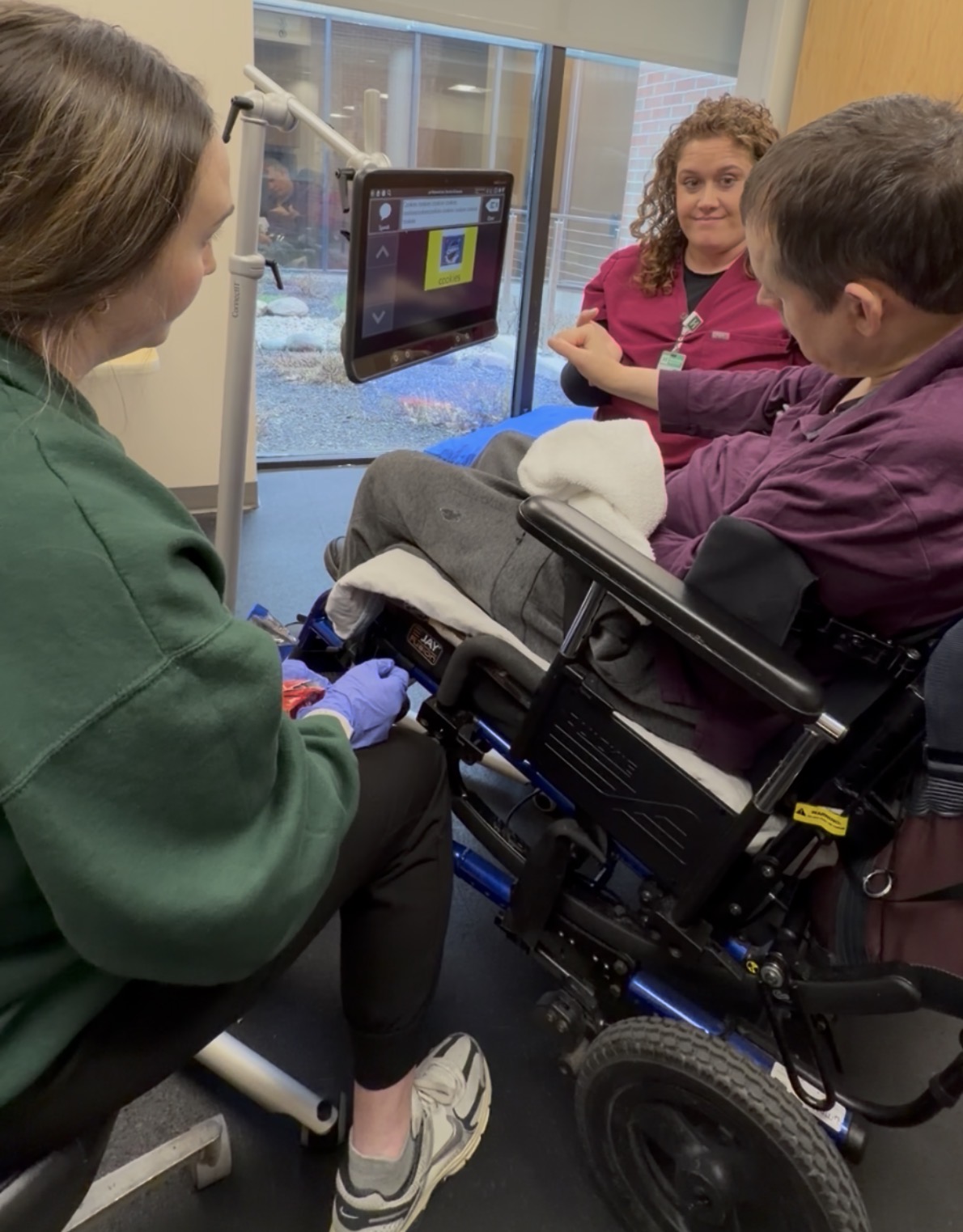
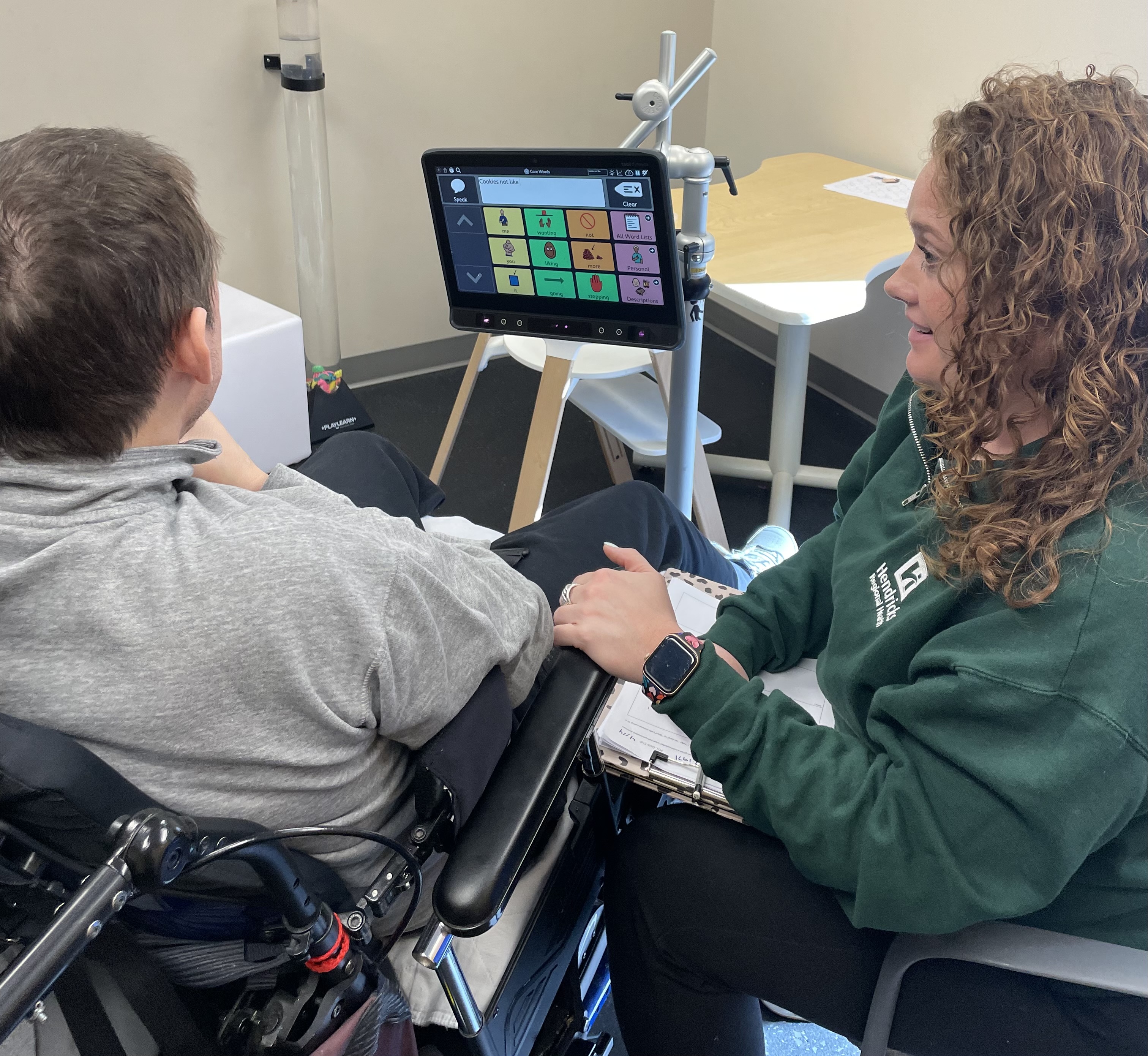
The newest addition to Hendricks’ speech therapy program is a high-tech AAC eye-gaze device; it is essentially a tablet equipped with advanced eye-tracking technology that allows patients to select words, phrases, and needs simply by looking at them. The device tracks the patient’s pupils and activates buttons on the screen, transforming eye movement into language.
For patients with severe speech impairments, this technology is life changing. “It’s giving them a voice when they can’t access communication the way most of us do,” said Kelsey McMullen, a speech therapist at HRH who requested the technology from the Foundation. “People don’t always realize how much power there is in being able to say what you want, how you feel, or what you need—until it’s gone.”
One Therapist’s Passion Becomes a System-Wide Impact
Kelsey has been a speech therapist for 11 years, drawn to the profession by her love of technology and by the sheer power of communication. Originally planning to become a teacher, she discovered speech therapy in college and quickly realized it would allow her to help people of all ages, across every stage of life.
But it was her early exposure to AAC, and especially eye-gaze technology, that defined her path.
Years ago, Kelsey worked with a patient with cerebral palsy who couldn’t push buttons or touch a screen. Eye gaze was the only option. The moment the technology worked, she saw something change.
“I saw this light turn on their eyes and got instant goosebumps,” she recalled. “I never imagined I would play a role in someone advocating for themselves for the first time.”
That moment became her mission.
Kelsey taught herself AAC technology by borrowing devices from vendors, experimenting, and learning through hands-on experience. She began to see how frequently patients without speech were talked for by well-intentioned caregivers and providers making decisions on their behalf. “That’s when I realized how often patients are forgotten when they can’t communicate,” she said. “I wanted to change that.”
Bringing the Technology to Hendricks Patients
Recognizing a critical gap in inpatient care, Kelsey pursued a Foundation grant to bring eye-gaze AAC technology directly into Hendricks. Her goal was simple but profound: to give hospitalized patients an immediate way to communicate.
In November 2025, she presented the grant request to the Foundation. Kelsey brought a borrowed device with her and invited board members to experience the technology firsthand.
“My job is to amplify the incredible work being done here every day across the entire health system,” said Joel Harbaugh, Executive Director of the Hendricks Regional Health Foundation. “When colleagues like Kelsey help us experience moments like these, through a patient’s eyes, we gain a deeper understanding of what it’s like to be scared, unsure, and in this case, unable to communication. Because of our donors’ generosity, we turn that empathy into action, improving the experience and outcomes for the people we serve.”
The reaction was instant. “They understood its power right away,” Kelsey said. The Foundation approved the grant, and by mid-February, the eye-gaze device officially arrived at Hendricks.
Real Patients. Real Voices.
The impact was immediate.
One of the first patients Kelsey worked with was a man in his 40’s who had spent his entire life unable to communicate independently. Using eye gaze, he quickly learned to make selections on the screen. He requested music and watched music videos. He asked for snacks and drinks. Then, one day, he told his care team, “I don’t feel good. I want to go home.” “For the first time, he was able to advocate for himself,” Kelsey said. “That moment was incredibly powerful.”
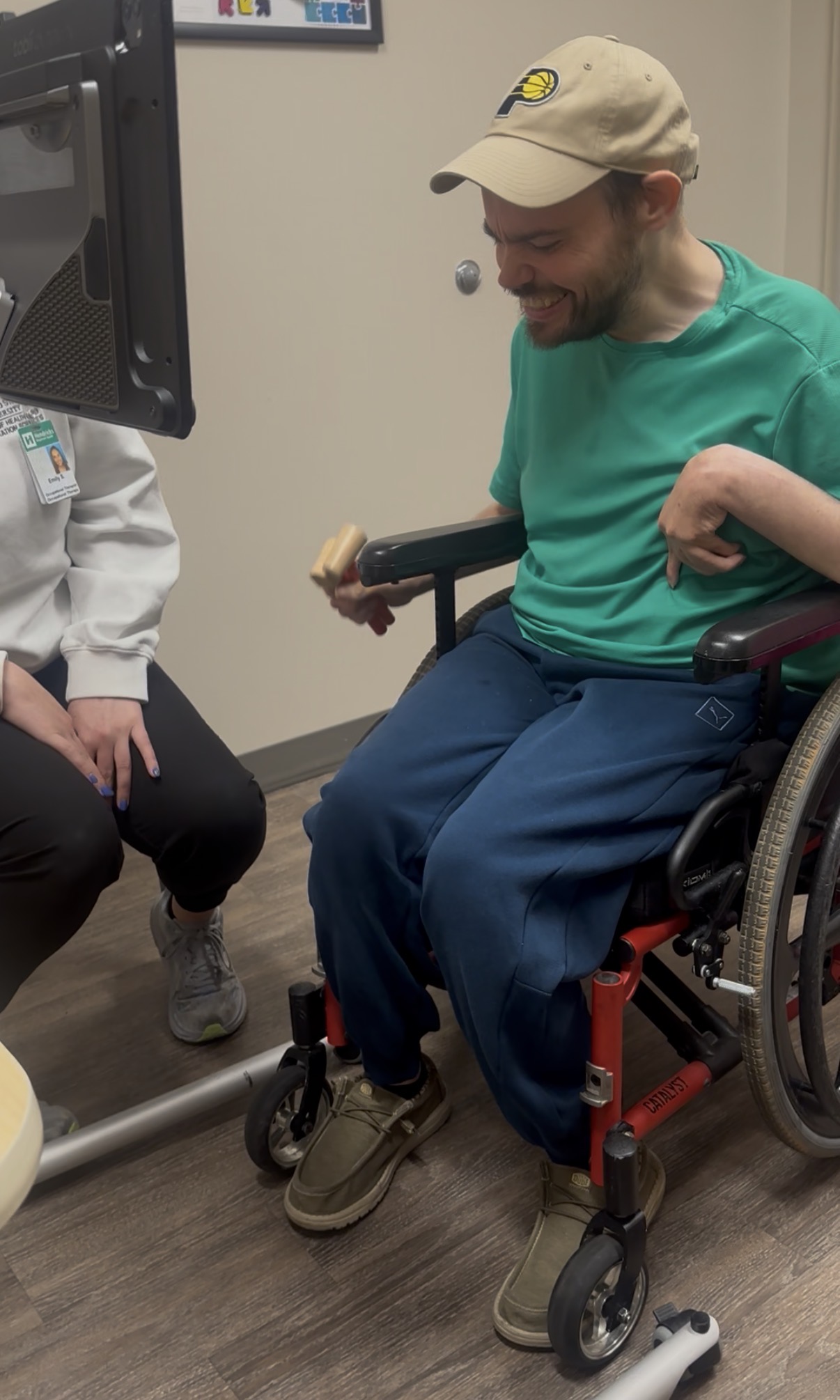
Another patient, a man in his 50’s who also had been unable to communicate independently. After years of others making decisions for him, he grew increasingly frustrated. During eye-gaze trials, something changed. At his most recent visit, he arrived smiling, something his caregivers said they rarely saw.
A Leader in Patient-Centered Innovation
Today, the AAC eye-gaze device is used across adult and pediatric outpatient speech therapy. Kelsey hopes next to expand its use into the ICU, where patients are often awake but unable to speak. Future applications could expand to inpatient medical and surgical units.
Studies show that when patients can communicate, they experience less distress and can even have shorter hospital stays. But for Kelsey, the value goes even deeper. “We do an excellent job treating the medical diagnosis,” she explained. “This technology helps prevent psychosocial and emotional needs from being overlooked. My goal is for people to value communication as much as the medical side of care.”
Powered by Generosity
Thanks to the Foundation, that message is being heard loud and clear. Because of donor generosity, Hendricks now offers a level of communication access that few healthcare systems provide. Word is spreading, and families are seeking out Hendricks specifically because they know this option exists. The vision is to grow the program, acquire additional devices, and reach even more patients. The Foundation’s support didn’t just purchase a device; it is unlocking an entirely new world for patients and families.
.jpeg)